The Differences Between Routine and Emergency Maintenance
Maintenance classification directly impacts response times, operating costs, and resident satisfaction. When routine requests are treated like emergencies, teams face unnecessary after-hours work and inflated vendor costs. When true emergencies are delayed, the result can be property damage, liability exposure, and unhappy residents.
Clear systems for handling rental maintenance allow property managers to prioritize correctly, protect assets, and maintain consistent service standards across every unit.
Routine vs. Emergency Maintenance at a Glance
Before diving deeper, here is a quick comparison for managing maintenance on a rental property.
| Category | Routine Maintenance | Emergency Maintenance |
| Urgency | Low to moderate | Immediate |
| Response Time | Within 24–48 hours | As soon as possible, often same day |
| Safety Risk | None | High |
| Property Damage Risk | Minimal | Significant if delayed |
| Examples | Running toilet, slow drain, appliance issue | Gas leak, flooding, electrical hazard |
| After-Hours Response | Not required | Required |
What Is Routine Maintenance?
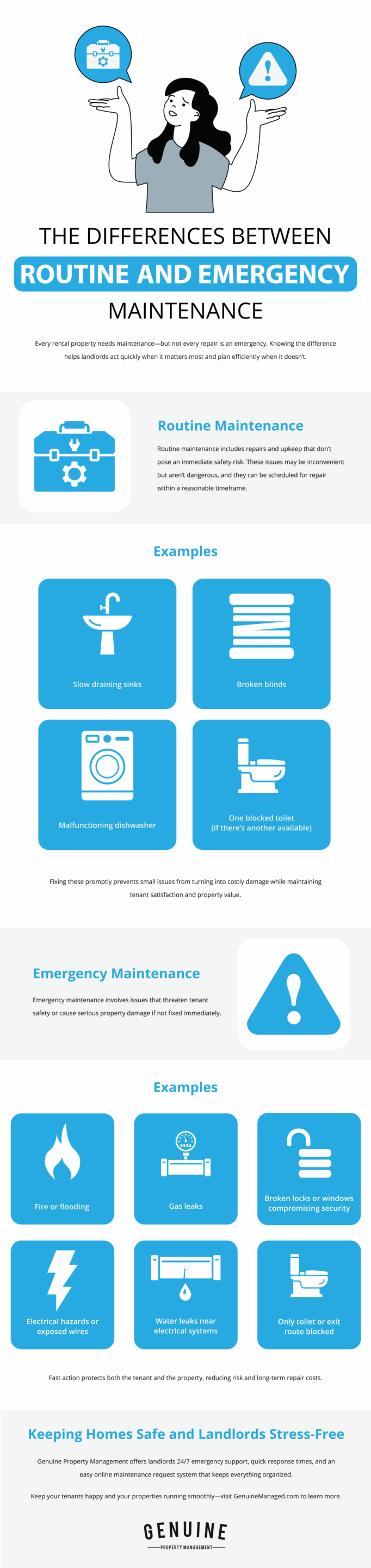
Routine maintenance refers to non-urgent issues that do not pose an immediate safety risk or threat to the property. Routine property maintenance is essential for preserving asset value and maintaining resident satisfaction, even though these issues can be scheduled during standard business hours.
Common Examples of Routine Property Maintenance
Routine requests often include:
- Slow-draining sinks or tubs
- Running toilets
- Appliance malfunctions
- Minor electrical issues such as non-working outlets
- Cosmetic or fixture-related repairs
These are typical components of rental property maintenance and should be addressed promptly through standard workflows.
Expected Timelines for Routine Requests
Most routine maintenance on a rental property should be resolved within 24 to 48 hours. This timeframe allows for efficient vendor coordination while keeping service levels consistent.
Why Routine Maintenance Should Not Be Overlooked
Delaying routine repairs increases the likelihood of escalation into larger issues. Small plumbing problems, for example, can lead to water damage if ignored. Strong routine property maintenance practices reduce long-term costs and help stabilize operations across a portfolio.
What Is Emergency Maintenance?
Emergency maintenance involves urgent situations that require immediate action to protect residents, the property, or both. These scenarios fall under emergency property repairs and demand a rapid response, often outside of standard business hours.
Common Emergency Property Repairs
Emergency repairs typically include:
Gas leaks
- Active flooding or major water intrusion
- Fire or smoke hazards
- Electrical dangers such as exposed wiring
- Broken locks that compromise security
- Loss of heat during cold conditions
These situations qualify as emergency property maintenance because delays can increase liability and cause extensive damage.
Response Expectations for Emergency Repairs
Emergency repairs should trigger immediate dispatch and coordination. Property managers need systems in place for 24/7 response, vendor availability, and clear escalation protocols.
Risk-Based Decision Making
The distinction between routine and emergency maintenance depends on risk. If an issue threatens safety or could cause rapid property damage, it must be treated as an emergency.
Gray Areas: When a Repair Can Shift Categories
Not all maintenance requests fall neatly into one category. Some situations require judgment based on context.
Situational Examples
- A clogged toilet may be routine if another bathroom is available
- A minor leak may be routine until it begins spreading
- Partial power loss may be manageable, while full outages require urgent response
How Property Managers Evaluate These Scenarios
Decisions are typically based on:
- Safety risk to residents
- Potential for property damage
- Impact on habitability
This framework ensures emergency property maintenance is reserved for high-risk situations while maintaining efficiency in routine workflows.
Setting Clear Maintenance Protocols for Residents
Well-defined processes reduce confusion and improve response times.
Standardizing Routine Maintenance Requests
Routine issues should be submitted through a centralized system, such as a tenant portal. Detailed descriptions and photos improve accuracy and speed.
Establishing Emergency Reporting Procedures
Emergency repairs should follow a separate reporting channel with clear after-hours instructions. This ensures urgent issues are addressed without delay.
Reducing Misclassified Requests
Providing clear guidelines helps prevent routine issues from being reported as emergencies, allowing teams to focus resources where they are needed most.
How Preventative Maintenance Reduces Emergency Repairs
Preventative care is one of the most effective ways to limit emergency property repairs and control costs.
Proactive Maintenance Strategies
- Regular HVAC servicing
- Plumbing inspections
- Seasonal property checks
- Preventative appliance servicing
Operational Benefits for Property Managers
Consistent routine property maintenance reduces unexpected breakdowns, improves budget predictability, and minimizes disruption across managed properties.

Understanding Maintenance Obligations and Risk Exposure
Maintenance on a rental property is closely tied to legal and operational responsibilities.
Immediate Repair Requirements
Issues that affect safety, security, or essential services must be addressed quickly to maintain habitability standards.
Managing Risk Across a Portfolio
Delayed emergency repairs can lead to increased liability, insurance claims, and reputational damage. Clear processes help mitigate these risks and ensure compliance.
How Professional Property Management Strengthens Maintenance Operations
Efficient rental maintenance requires structure, technology, and reliable vendor coordination.
24/7 Emergency Maintenance Coordination
Round-the-clock availability ensures emergency property maintenance is handled without delay, reducing risk and protecting assets.
Streamlined Routine Maintenance Systems
Digital portals allow for easy submission, tracking, and management of routine requests across multiple properties.
Faster Vendor Dispatch and Oversight
Established vendor networks improve response times and ensure consistent repair quality, especially during high-priority situations.
Build a More Efficient Maintenance System for Your Properties
Strong maintenance systems improve operational efficiency and protect long-term property value. Clear distinctions between routine and emergency repairs help property managers allocate resources effectively and avoid unnecessary costs.
With structured processes, 24/7 coordination, and proactive maintenance strategies, managing rental property maintenance becomes more predictable and scalable.
Get started with Genuine Property Management, Southern California’s most popular property manager, to streamline your maintenance operations and improve response times across your portfolio.