Common Tenant Rent Scams Landlords Need to Watch Out For

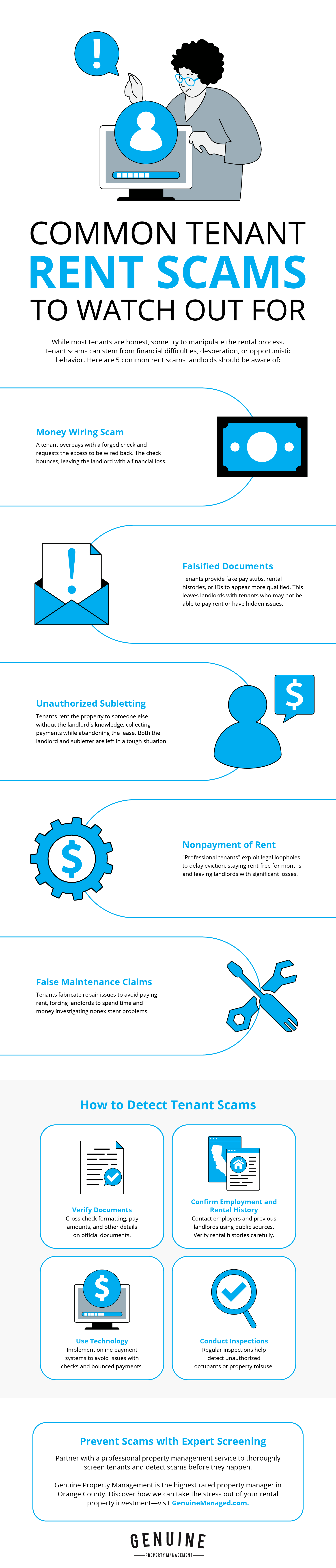
While most tenants are honest and reliable, there are some who attempt to manipulate the rental process for their own gain.
Tenants scamming landlords stem from a variety of motives, including financial difficulties, desperation, or simply an opportunistic desire to exploit loopholes in the system. In some cases, tenants may be facing personal hardships that lead them to deceitful behavior, while others may see scamming landlords as an easy way to live rent-free or make extra income.
Regardless of the reasons, it’s essential for landlords to be aware of these scams and take proactive steps to safeguard their properties and investments.
5 Common Tenant Scams to Be Aware Of
Here are some of the most common rent scams landlords should be aware of to protect their properties and avoid potential financial losses.
1. Money Wiring
This tenant scam is one of the oldest tricks in the book, and most landlords are aware of it. A landlord will receive a rental application from somewhere overseas. Once the renter has been accepted, they send a certified check, but intentionally overpay. They then request the landlord to wire back the excess amount as quickly as possible.
The issue arises when the initial check has been forged but will take weeks to bounce. By this time, the landlord has already wired overseas, resulting in a complete loss. This scam preys on the urgency to return funds, and by the time the fraud is detected, the scammer has disappeared.
2. Forged and Falsified Documents
Rent scammers may present a variety of falsified documents, including pay stubs, employment records, rental history, and even identification, to appear more qualified for a rental property than they truly are. This tenant scam often goes unnoticed because landlords rarely expect official-looking documents to be fake.
These falsifications can leave landlords with tenants who are unable to afford the rent, or worse, tenants with problematic rental histories hidden behind forged references. Falsified identification documents can also make it difficult to pursue legal action, as landlords may not even know the true identity of the tenant.
3. Subletting to Third Parties
This type of fake tenant scam negatively affects the landlord and the third party who has been found a victim to the scam. In this case, someone rents your property and pays rent for a couple of months before stopping altogether.
When the landlord goes to check on the property, they find someone else living there. This third party has been subletting the unit from the original renter, likely paying rent directly to the scammer. By the time both the landlord and the subletter realize what’s going on, the tenant fraudster has vanished. The subletter is often left without recourse, while the landlord may face delays in regaining control of the property.
4. Nonpayment of Rent
In this tenant scam, tenants exploit legal loopholes, such as recent eviction laws,, or draw out the eviction process to remain in a rental property for as long as possible without paying rent. These so-called “professional tenants” may have used this tactic repeatedly with other landlords.
They often know the legal system well enough to delay eviction proceedings, allowing them to live rent-free for months, leaving landlords frustrated and financially strained. By the time the eviction is complete, significant losses and possible property damage have often accumulated.
5. Claiming Non-Existent Repairs
Tenants may repeatedly claim that damages or maintenance issues exist in the property as a way to avoid paying rent. They might report false repairs such as plumbing issues, electrical problems, or appliance malfunctions that don’t actually exist.
This tenant fraud tactic is used to stall rent payments or demand rent reductions, forcing landlords to spend unnecessary time and money investigating and addressing the fabricated issues. These false claims can also cause tension, as tenants attempt to leverage the situation for financial gain.
Detect Rent Scams Before They Happen
Detecting rental scams by tenants early requires a combination of traditional methods, technology, and thorough analysis. By leveraging all resources available, landlords can significantly reduce the risk of being scammed. Here are key strategies to help identify potential rental fraud before it happens:
Document Verification
- Check for Consistent Formatting: Official documents like bank statements should follow consistent formatting. Compare documents for mismatched fonts, logos, or details.
- Cross-Check Information: Ensure details like pay amounts match across documents. Look for discrepancies in year-to-date earnings or bank balances.
Employment and Rental History Verification
- Contact Employers Directly: Verify employment by contacting employers using publicly available contact details. Don’t rely solely on tenant-provided information.
- Verify Rental References: Reach out directly to previous landlords and check their legitimacy. Be cautious if contact details seem suspicious.
- Cross-Check Social Media: Use online platforms like LinkedIn to confirm the tenant’s work and lifestyle claims.
Financial Review
- Verify Payment Patterns: Confirm that regular payments, like direct deposits, appear consistently. Check for fluctuating amounts or altered statements.
- Check Monthly Balances: Ensure that the ending balance on one statement matches the beginning balance on the next.
Property Inspections
- Check for Extra Occupants: Regularly inspect properties to ensure only the listed tenant resides there. Look for signs of subletting or excessive foot traffic.
- Document Property Condition: Take photos or videos before move-in to counter false damage claims.
- Verify Repairs: Hire professionals to assess any reported issues before approving costly repairs.
Use Technology
- Online Payment Systems: Avoid cash or checks by using digital payment systems to track rent and prevent bounced checks or partial payments.
- Partner with Property Management: Property management companies can handle proper screening, rent collection, and legal matters to better detect tenant scams.
Trust Genuine Property Management
At Genuine Property Management, we specialize in thorough tenant screening and have the expertise to detect and prevent common rent scams.
Our comprehensive process ensures that you get reliable tenants while protecting your property from fraud. Let our experienced Orange County property management team handle the complexities of tenant management, so you can enjoy peace of mind and a secure investment.